Kiara Lee, PhD
Five years ago, I travelled back in time to my metaphorically crooked seat in a high school honors class by way of my think piece “A Crooked Seat at the Table: Black and Alone in an Honors Class.” As uncomfortable as it was, I chose to return to that rocky, unstable chair. It was painful. It was eye-opening. It was necessary.
According to the United Negro College Fund, statistics show that Black and Brown students are much less likely to have access to honors courses and even when they do, they are less likely to enroll in these classes than students in other demographics. Generally, students are enrolled in honors classes based on their subject area GPA and a teacher recommendation.
In 2020, I went back to my crooked chair to share an untold story we could all learn from. A story rife with micro aggressions, blind spots and (yet and still), perseverance.
Five years later, and I’m back to time-traveling, but this time, I’m sitting in someone else’s seat — not the seat of the girl next to me who covered up her test as if I was cheating off of her and not the seat of the boy who stared at me as if I was an alien with 3 heads. This time, I’m sitting in the teacher’s chair. The teacher who, in her questioning, always asked me to represent the entire Black community as if it were a monolith. The teacher who was completely oblivious to the blatant and passive aggressive discrimination I faced every single day in her class. The teacher who ultimately, despite my straight As, decided to exclude me from the opportunity to take the AP (Advanced Placement) English exam (to place out of the course itself) during the upcoming school year, although she said herself that I qualified for it.
If my seat was crooked then hers was completely unhinged.
Consider this sequel a PSA to all the teachers out there. The former high school student in me and the current professor in me would like to have a word with you.
A Vicious Cycle
Years later, after plenty of time to reflect on and talk out my experiences in the crooked seat at the table, I have made meaning of my experience. Talking to and working with others who share similar experiences, I have realized that this is a systemic phenomenon. In the Oxford Dictionary, a phenomenon is described as an occurrence that has been observed and therefore, does exist, but there remains obscurity surrounding its cause or origin. The obscure part about the crooked seat at the table in an honors class is the possibility that Black and Brown students are suffering these unknown, nuanced experiences in silence, under the guise of opportunity and advancement.
This is how I’ve pathologized my experience being Black and alone in an honors class:
- Preconceived notions teachers come into the classroom with influence their perception of Black and Brown students.
- Microaggressions are then born (or continued): these lone ranger students are reduced to a monolith by the teacher and are not completely seen for who they are as an individual.
- Students perceived to be perpetuating the microaggressions through a combination of teachers’ possible preconceived notions, simply existing in a culturally homogeneous class environment and students’ responses to picking up on teacher’s microaggressions.
- Teachers develop a sense of ownership and start gatekeeping the honors space; as a result, Black and Brown students are booted out passively by way of microaggressions & discomfort or explicitly, at the hands of the teacher or other authoritative figures in the school.
For many people, teachers are generally perceived as innately unbiased, but studies have proven time and time again, this is simply not the case. Humans are flawed and teachers are humans, just like the rest of us. Project Implicit, a non-profit that collects and analyzes data from Implicit Association tests, has found that the overwhelming majority of teachers sampled are likely to “demonstrate implicit bias.”
Teach, Don’t Gatekeep
Teachers, here are 3 things to consider when starting to work against the spirit of gatekeeping in an honors course:
- Expose students to other ways of knowing and learning and include what the outnumbered Black and Brown student(s) in your class bring(s) to the table. By acknowledging and including ideas and approaches other than the standard or what you’re familiar with will open up new worlds to all of your students. Who knows what new ideas and possibilities this may spark in your classroom and beyond. Without this approach, only certain students will have full access to their own potential and the potential of your honors course.
- If you don’t have answers for your students, consult with a person or a resource who does. When you don’t do so, you’re not only hurting your students, but you’re hurting yourself. Sometimes, being helpful and best serving your students means getting help yourself, and that’s okay.
- Share the same opportunities with the outnumbered students that are shared with the rest of the class. These students are going to shine their light, whether you gate keep their trajectory or not, so you might as well make room for them to brighten up your classroom. Although I was completely excluded from an opportunity I absolutely deserved to take part in, I worked 10 times harder for the myriad of opportunities that came my way shortly after that experience. Minority students often have underdog experiences; many of us are taught some version of ‘you have to work 10 times harder than everyone else’ by our parents as a result of so many experiences like mine. Like the late, great Dr. Maya Angelou said, and still we rise.
The Bigger Picture
To the teachers who tend to gatekeep: you may be wobbling in your crooked seat as your read this, feeling personally touched (or attacked) by my words. Know that this was written with love and with hope for better. Know that it’s not too late to change. What you do with that is entirely up to you.
And to the teachers who don’t gatekeep: I have so much love for each and every one of you. The majority of my own teachers unlocked doors to wonder and opportunity. They wanted to nurture my experiences and my intellect. They welcomed books from my home into their own curriculum. They helped me make my crooked chair straight.
As an educator myself now, I can look back on my experience. I crawled through the battlefield so hopefully, the next generation that I teach and mentor can briskly pass through it. I ducked and dodged mines and grenades so my daughter can prayerfully skate through the sometimes-convoluted obstacle course that we call schooling. Being Black and alone in an honors class turned a bright, bubbly, nerdy girl into a seasoned soldier. I am grateful, but at the same time, I am not.
There’s a lot of talk about what to do about the inequities in honors classes — some even say that honors classes should be scrapped completely and that all students should be taught at the same level.
I say the real culprit can be found in the classrooms, the homes and the culture of years past. If we could travel back in time to the old, crooked seats of today’s gate-keeping teachers, I think we could learn a lot about what to do going forward.
It will be painful.
It will be eye-opening.
It will be necessary.
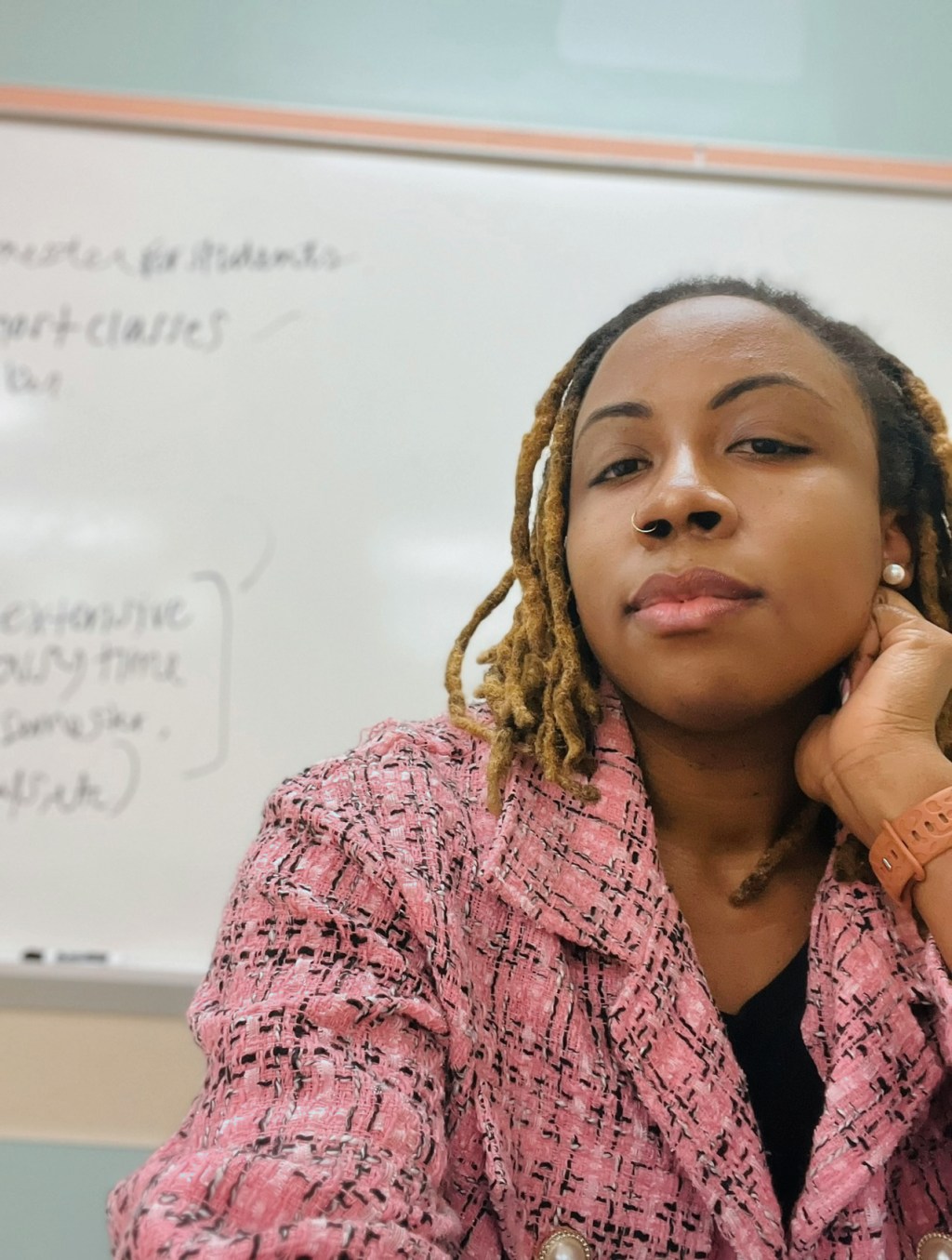
My name is Kiara and I’m a writer, an assistant professor teaching writing and a communication consultant at my consultancy, The House of Psalm. I’m passionate about education and writing; I’m even more passionate about using writing to spark conversations on the lessons that aren’t in the textbook here at The Psalm Review. Much of my work is named after my beloved daughter, Psalm.
IG @kiaraleewrites @thehouseofpsalm
 The Psalm Review
Leave a comment